Key Points
Bill Gates previously said in September that artificial intelligence could lead to "a billion deaths."
On a recent podcast, Gates warned about a very difficult transition period as AI becomes more integrated into society.
If anyone knows technology, it's Bill Gates. The now multi-billionaire launched Microsoft in 1975, which is now one of the world's largest companies. Microsoft started out writing software programs for personal computers and eventually launched the Windows operating system in 1985, soon becoming the largest PC software company.
Today, Microsoft continues to play this role and has developed programs such as Excel and Word under the Microsoft 365 brand that more or less power the business world.
Missed Nvidia in 2009? This Rare Signal Is Flashing Again.In 2009, a "Double Down" signal flashed for a little-known chipmaker called Nvidia. For the first time in years, that same "Total Conviction" signal is flashing for a company 1/100th the size of Nvidia. Continue »
Gates has now been part of, and has seen technology rapidly change for roughly six decades, which is why it's fairly concerning to see the longtime tech guru issuing such a blunt warning on artificial intelligence (AI).
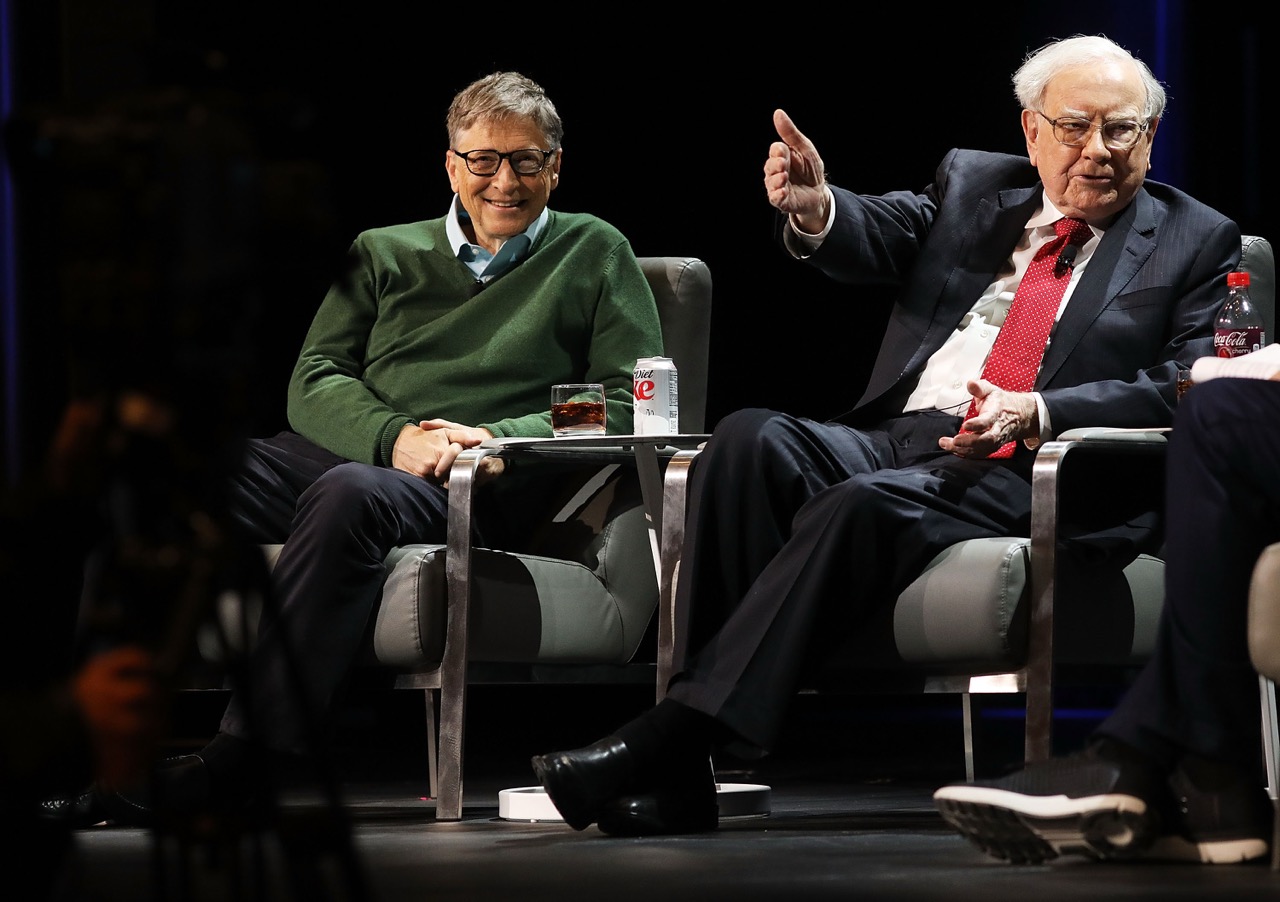
Bill Gates and Warren Buffett. Image source: Getty Images.
A rough 20-year transition could be incoming
More recently, Gates has been quite vocal on his concerns about AI.
In a TV interview in late September, Gates said that if AI remains unregulated, it could lead to "a billion deaths," adding that "no one thinks self-regulation is enough."
Gates urged politicians and even law enforcement to start thinking "about what safeguards and monitoring look like" because he didn't think even having a "kill switch" would be enough.
Last week, Gates appeared on the "Decoder" podcast, and while his warnings had a different tone, they were still pretty blunt. Gates sounded more optimistic about the benefits of AI, suggesting that it could create "true abundance." However, not without a difficult road first.
"My big concern is this 20-year transition period, where they'll have winners and losers and a lot of disruption," he said.
Gates believes AI will make many jobs like telesupport and accounting vanish because AI can do these jobs faster, cheaper, and more efficiently. Blue-collar jobs face threats from humanoid robots.
"If we don't choose to massively slow down or stop, then we will have robots that can build houses, grow food, do surgery," Gates said. "And none of the things that human labor provides to the economy will be necessary for most goods and services."
Gates certainly isn't the first to issue this warning. Many believe AI will be extremely deflationary and solve many of the world's inefficiencies, while also performing many of the chores humans are tasked with daily.
However, it's many of these inefficiencies and tasks that provide jobs, so if AI can truly do everything, what jobs will be left for humans? How will people make money?
Maybe people will no longer have to work as hard and will have more free time, but it's tough to know whether that will truly be a good thing or simply lead to a loss of purpose for many people.
Gates is a more authoritative voice
Earlier this year, Jacob Coxon, a former AI researcher who worked at OpenAI and Anthropic, resigned from his role at Anthropic and warned in a social media post that he believes there is a greater-than-10% chance that AI will eliminate all humans.
While the post went viral and was taken seriously, critics argued that the 27-year-old had fallen into a narrative that was more cultlike than grounded in reality.
But with Gates, it's a bit harder to make that case because of his knowledge, experience, and the time he spent during periods of technological change. Obviously, 20 years is still a long time, so I don't think anyone can say for certain what will happen.
Gates isn't the only person who has warned about the perils of AI. Even Anthropic CEO Dario Amodei has also issued similar warnings, which many have found odd: If you're so worried about AI, why do you continue to press ahead with one of the largest large language models (LLMs) in the world?
Amodei has said that if Anthropic were to stop, that wouldn't put an end to AI, and he's likely right. Once technology has been unleashed, it is difficult to put the genie back in the bottle.
At this point, there have been enough incidents with AI agents and enough warnings from prominent voices in the space, so these should be taken seriously.
Missed AI’s "Act 1"? Act 2 Could Be 14x Bigger
Most investors think they missed the AI boat because they didn't buy Nvidia in 2005.
But according to our analysts, we’re only at the end of "Act 1"—the R&D phase. "Act 2" is the global rollout, a massive technology build-out that Google’s CEO says could be more profound than fire or electricity.
While everyone watches the chip designers, one "backbone" company provides the critical technology that Nvidia and AMD literally cannot function without. We’ve detailed this under-the-radar player in our new AI Playbook.
Bram Berkowitz has no position in any of the stocks mentioned. The Motley Fool has positions in and recommends Microsoft. The Motley Fool has a disclosure policy.